An immigration medical exam includes a medical history review, a full physical examination, blood tests, a tuberculosis screening, a vaccination record review, and a mental health and substance use evaluation. All of this is documented by a USCIS-designated civil surgeon on Form I-693, which is submitted as part of your green card application.
If you are getting ready to apply for adjustment of status and are wondering exactly what happens during this appointment, this guide walks you through every component of the exam, what costs extra, and what to expect when it is over.
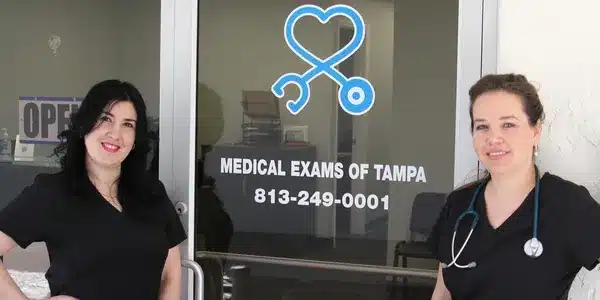
Whether you are in the early stages of your green card process or already have your I-485 ready to file, understanding what the exam covers helps you prepare the right documents and avoid unnecessary delays. If you are in the Tampa Bay area, Medical Exams of Tampa offers immigration exams in Tampa with bilingual staff.
Why the immigration medical exam exists?
The United States requires all applicants for permanent residence to complete a medical examination before USCIS approves a green card. The purpose is not to give you a general health checkup. The exam exists specifically to identify conditions that could make a person inadmissible under U.S. immigration law, primarily communicable diseases of public health significance, certain mental health conditions, and substance use disorders.
The civil surgeon conducting the exam does not grade your overall health. A chronic illness, a managed condition, or a past medical history does not automatically disqualify you. What matters is whether specific categories of conditions are present and active at the time of the exam.

Medical history review: the starting point
The exam begins with a review of your medical history. The civil surgeon will ask about past surgeries, chronic conditions, hospitalizations, current medications, and any history of mental health treatment or substance use.
This part of the appointment is where preparation makes a real difference. Bring written records of any relevant diagnoses, especially if you have a history of tuberculosis, syphilis, or any psychiatric treatment. If you have had a previous positive TB skin test, the civil surgeon needs documentation of that result and any treatment you received. Being transparent and organized at this stage makes the rest of the appointment significantly smoother.
The physical examination
After the history review, the civil surgeon performs a hands-on physical exam. This covers your eyes, ears, nose and throat, heart, lungs, abdomen, lymph nodes, skin, and extremities. Vital signs such as blood pressure and heart rate are also recorded.
This is not a comprehensive primary care physical. The scope is defined by CDC guidelines and focuses on identifying specific conditions relevant to U.S. immigration law. You will not receive a diagnosis for unrelated conditions found during the exam, and the civil surgeon is not required to treat anything outside the scope of what USCIS mandates.
Blood tests and TB screening
Two laboratory tests are always part of the immigration medical exam:
- QuantiFERON-TB Gold blood test: required for all applicants two years of age and older. This is the standard tuberculosis screening method used in the United States for immigration purposes. If the result comes back positive, a chest X-ray will be required as a follow-up step, and the civil surgeon will determine whether the condition is active or latent.
- Syphilis blood test: required for applicants 15 years of age and older. If the result is positive, you will need documentation of prior treatment or must complete treatment before the process can move forward.
A chest X-ray is not automatically included in every exam. It is ordered when the QuantiFERON result warrants it, or when there is another clinical reason. If you are pregnant and a chest X-ray is required, you must provide consent and will receive abdominal shielding during the procedure.
Vaccination review and required immunizations
One of the most time-consuming parts of the immigration medical exam is the vaccination assessment. The civil surgeon reviews your immunization records and determines which vaccines you still need based on your age, documented history, and current CDC guidelines.
Required vaccines for immigration purposes typically include protection against mumps, measles, rubella, polio, tetanus and diphtheria toxoids, pertussis, Haemophilus influenzae type B, hepatitis A, hepatitis B, varicella, meningococcal disease, and influenza (when the exam takes place during flu season, between October 1 and March 31). As of January 20, 2025, the COVID-19 vaccine is no longer required for adjustment of status applications.
If your vaccination records are incomplete or unavailable, the civil surgeon can administer the missing vaccines during your appointment at an additional cost, or direct you to a pharmacy or health department. If you have documentation from your home country, bring it: records in other languages must be accompanied by a certified translation.
For some vaccines like MMR or varicella, a blood test called a titer can confirm immunity if you cannot locate your original records.
Mental health and substance use screening
The immigration medical exam also includes a mental health evaluation. The civil surgeon assesses your general orientation, mood, speech, thought process, behavior, and judgment. This is not a psychiatric evaluation, but it is structured to identify conditions associated with harmful behavior that could make a person inadmissible under immigration law.
Substance use is also part of the exam. The civil surgeon will ask directly about current or past drug and alcohol use. A history of substance use does not automatically disqualify you, but active addiction or ongoing abuse can result in a Class A finding. If you have completed treatment or are in documented remission, bring supporting records from your treating physician.
Class A vs Class B conditions: what they mean for your case
Every finding the civil surgeon documents falls into one of two categories:
Class A conditions are those that make an applicant inadmissible without a waiver. These include active, untreated tuberculosis; untreated syphilis or gonorrhea; active drug or alcohol addiction; and physical or mental disorders associated with harmful behavior.
Class B conditions are less severe. These are health issues that do not make you inadmissible but are notable enough to document, such as controlled diabetes, treated hypertension, or a prior mental health condition that is now stable. Class B findings are noted on Form I-693 but do not block your application.
Understanding this distinction matters because being found with a Class A condition does not mean the end of your application. In most cases, treatment or documentation of successful management is enough to move forward, sometimes with a waiver of inadmissibility.

What the exam does NOT include
This is where many applicants are caught off guard. The base immigration medical exam fee covers the physical examination, blood tests, the vaccination record review, and the completed, sealed Form I-693. Vaccinations themselves are typically not included in the base price and are billed separately.
A chest X-ray, if needed, is also an additional cost. At Medical Exams of Tampa, the base exam is $270 for adults and $220 for children, and vaccinations can be administered at the clinic or at your preferred pharmacy.
You do not need to fast before the appointment. No dietary preparation is required for any of the standard tests performed during the immigration medical exam.
What happens after the exam? Form I-693
When the exam is complete, the civil surgeon seals the results in an envelope with Form I-693. Do not open this envelope under any circumstances. As of December 2, 2024, USCIS requires Form I-693 to be submitted together with your Form I-485 at the time of filing. Submitting them separately can result in your application being rejected.
The validity of Form I-693 is now indefinite for applicants adjusting status in the United States, as long as USCIS does not request a new exam. However, if your application is withdrawn or denied, you will need a new medical exam for any future application.
Once USCIS receives your sealed envelope, your medical record becomes part of the adjudication of your green card. You will not receive a pass or fail notification. The results are evaluated by the adjudicating officer as part of the full application review.
Ready to schedule your immigration exam in Tampa?
If you need to complete your immigration physical in the Tampa Bay area, Medical Exams of Tampa is a USCIS-designated civil surgeon office with bilingual staff, transparent pricing. The team handles the full exam including blood tests, vaccination review, and the sealed Form I-693 so your application is ready to file without delays.
Schedule your appointment directly at Medical Exams of Tampa or call 813-249-0001.